Hi there everyone!
Wanted to share the interview that I did with Erika over at the food blog Comfy Belly. She did a great job putting together the interview and I think the questions and answers that are presented will benefit many as they go through the process of eating SCD.
Check out her site while you are there. She has some amazing recipes, mostly SCD but some GF.
Comfybelly Interview Here
Take care and good health to all of you,
Tucker
Showing posts with label specific carbohydrate diet. Show all posts
Showing posts with label specific carbohydrate diet. Show all posts
Tuesday, March 12, 2013


Monday, January 7, 2013
Crunchy Energy Bars
These bars are super easy to make and in my opinion put other bars like Lara Bars to shame. Think salty, sweet, and crunchy compared to thick and pasty. I almost always make a batch of these before an outdoor trip because they provide plenty of quick energy and are tough enough you can just throw them in a bag with some other food and they wont get crushed. Sometimes I like to add a little kick to the bars by adding a dusting of cayenne.
Ingredients:
1/2 cup cashews
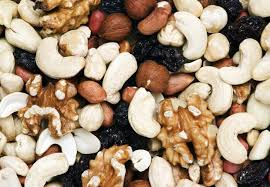 1/2 cup almonds
1/2 cup walnuts
1/4 cup pumpkin seeds (optional)
1/2 cup shredded coconut (I like the large flake variety)
1/4 cup honey ( I like 1/4 cup but you could use 1/2 cup if you like it sweeter)
2T Butter or coconut oil/manna (The coconut oil tends to make them a bit greasy)
1tsp vanilla
1/8 tsp salt
1/2 cup chopped dried fruit (raises, dates, etc.)
Dusting of cayenne (optional)
Method:
Preheat oven to 350 degrees
Rough chop the nuts using a knife or food processor. Do not over chop. Think about cutting a cashew into 1/3-1/4 no smaller. Add the chopped nuts, seeds, and coconut to a large bowl. In a bowl or measuring cup mix together the honey, vanilla, and butter/coconut product. Heat honey mixture in microwave if needed to get to a more liquid state. Add to nuts and mix. Add salt and mix again.
Spread nut and honey mixture onto a cookie sheet lined with parchment paper. Bake for 10 minutes, re-spreading the mixture once to cook evenly. After 10 minutes mix in the 1/2 cup dried fruit and bake for another 10 minutes stirring once.
Remove the mixture from oven and pour into a large bowl. Do not let it cool on the parchment paper as you will not be able to remove it without sticking. Let mixture cool until you can easily handle it with your hands, yet not cool enough that it is rock hard. This should take about 10-15 minutes.
When cool, form into bars with your hands by compressing the mixture between your two hands. You need to use pressure to initially hold the bars together until they cool. I like to form bars that resemble a Clif Bar. About 1/2" thick X 3" long and slightly oval shaped. You however, can make any shape you want just realize they will become hard when cool so ball shapes aren't easy to eat.
Let shaped bars cool in room temp for about an hour then toss into fridge.
Have a wonderful winter season!
If you like what you see on this blog check out our book on Amazon.com
Ingredients:
1/2 cup cashews
1/2 cup walnuts
1/4 cup pumpkin seeds (optional)
1/2 cup shredded coconut (I like the large flake variety)
1/4 cup honey ( I like 1/4 cup but you could use 1/2 cup if you like it sweeter)
2T Butter or coconut oil/manna (The coconut oil tends to make them a bit greasy)
1tsp vanilla
1/8 tsp salt
1/2 cup chopped dried fruit (raises, dates, etc.)
Dusting of cayenne (optional)
Method:
Preheat oven to 350 degrees
Rough chop the nuts using a knife or food processor. Do not over chop. Think about cutting a cashew into 1/3-1/4 no smaller. Add the chopped nuts, seeds, and coconut to a large bowl. In a bowl or measuring cup mix together the honey, vanilla, and butter/coconut product. Heat honey mixture in microwave if needed to get to a more liquid state. Add to nuts and mix. Add salt and mix again.
Spread nut and honey mixture onto a cookie sheet lined with parchment paper. Bake for 10 minutes, re-spreading the mixture once to cook evenly. After 10 minutes mix in the 1/2 cup dried fruit and bake for another 10 minutes stirring once.
Remove the mixture from oven and pour into a large bowl. Do not let it cool on the parchment paper as you will not be able to remove it without sticking. Let mixture cool until you can easily handle it with your hands, yet not cool enough that it is rock hard. This should take about 10-15 minutes.
When cool, form into bars with your hands by compressing the mixture between your two hands. You need to use pressure to initially hold the bars together until they cool. I like to form bars that resemble a Clif Bar. About 1/2" thick X 3" long and slightly oval shaped. You however, can make any shape you want just realize they will become hard when cool so ball shapes aren't easy to eat.
Let shaped bars cool in room temp for about an hour then toss into fridge.
Have a wonderful winter season!
If you like what you see on this blog check out our book on Amazon.com
Tuesday, June 5, 2012
Breaded Fish
Hi there everyone, hope this post finds you healthy or on the road to a better life while dealing with IBD. I wanted to post a quick recipe that we have been doing here in our household quite frequently. It is a fried fish, much like you would find with traditional "fish and chips". The recipe and method are so simple it works great for those late dinners when no one is interested in cooking.Here we go!
Ingredients:
- about a pound of Cod fish (or other white fish)
- oil for frying
- 1 cup almond flour*
- 1t paprika*
- 1/2 t salt*
- 1/8 t cayenne*
- 1/8 t garlic salt*
- 1/2 cup mayonnaise* (scd legal homemade or legal brands like trader joes or spectrum)
- 1 t lemon juice*
- 1/4 t paprika
- few shakes salt and pepper
*Spice amounts are approximate. I usually just sprinkle the spices into the bag until I think it looks right. Use your judgement and follow your taste buds.
Find yourself a large Ziploc bag. Add fresh fish to the bag in manageable sizes. Fish should be moist but not wet. Do not add freshly defrosted fish because the breading will not stick properly to the fish, instead let frozen fish sit in refrigerator overnight.
With the fish in the bag add almond flour, paprika, salt, cayenne, and garlic salt. Close bag and give it a shake until the fish is evenly coated with the breading mixture.
Add a high heat oil (I like to use grapeseed oil) to a heavy pan (enough oil to cover bottom but no more) and heat until wooden spoon bubbles when dipped into oil. Add breaded fish to pan and cook each side for 2-3 minutes before turning. Take care to not lose the breading while flipping. A spatula helps with this. Cook until fish flakes.
For the tartar sauce mix all of the ingredients together and keep cold until ready to use.
For traditional "fish and chips" make up a batch of butternut squash fries as a side.
Take care and enjoy!
Tucker
*For more recipes and tips find our book Here
Wednesday, October 26, 2011
Book Preview!
Hi everyone, I wanted to provide the first couple of pages of the introduction to our book: Two Steps Forward, One Step Back. A journey through life, ulcerative colitis, and the specific carbohydrate diet. Hope you enjoy. Available at: Amazon.com
Take care,
Tucker
Introduction
~Me, Myself, and UC~
Looking back upon my life before ulcerative colitis (UC), it seems
like such a simple time. Most day’s, thoughts of medications, food
ingredients, and restroom locations were simply absent from my mind. I
took these things for granted back then, and used them when I wanted and
how I best saw fit. My body was working like it should and I was enjoying all
it could give me with little thought of things going wrong. Like most people,
I had the beautiful luxury of feeling like major illness would not intrude on
my life; like somehow I would be exempt from its cold and firm grasp. I was
healthy, young, and able-bodied. What could possibly happen to me?
Most of the time, people who are not sick cannot fully grasp the
realities that disease throws at the sufferer. You end up eating, breathing, and
thinking about the disease 24/7. Worse yet, as an inflammatory bowel
disease (IBD) sufferer you are reminded of your condition multiple times a
day as it stares back at you from the toilet. There is no need to seek the
confirmation from a doctor that you are sick—you already know it. It
whispers to you during the night while you are bleeding, sweating, and
cramping on the toilet. It shouts at you when you catch a glimpse of the
gaunt figure standing in front of the mirror. And finally, it laughs at you
when you are in public, and have to run and hide, seeking refuge within the
confines of restroom walls.
Along with many others, I have decided to try and end this
nightmare by way of diet and lifestyle modifications, in particular by
following the Specific Carbohydrate DietTM or SCDTM. This is a form of
healing from the inside out, if you will. Is it hard? Yes. Did the SCD work
for me and countless others? Yes. What is holding you back from giving it a
shot? Only yourself.
~Choices and Actions~
When you or someone you love is diagnosed with an IBD, two
questions arise: What is the disease and what can I do about it? Some
theories suggest the cause could be pathogenic organisms, an abnormal
immune response, or an antigen/bacterial overgrowth. The basic fact is no
one really knows the root cause of IBD or how to fully cure it. This leaves
the patient and the medical profession with the task of not curing the disease,
but managing it.
Since there is no cure for IBD, management choices may include one
or more of the following options. The first option usually involves
medications like steroids, anti-inflammatory meds, or immune suppressors.
This is usually the first thing your doctor will insist you do, and what I chose
to do initially. During my experience and meetings with fellow people who
suffer from IBD disorders like Crohns disease and ulcerative colitis, there
seem to be those who find good results with medication, and others, like
myself, who do not. For me, the medications would work for a while and
then gradually lose effectiveness, forcing me to seek other options and
treatments. Even if you do start the SCD diet, many people find that they
need to have the aid of medications to begin the healing process.
The second option people tend to follow is to take the disease and
treatment into their own hands, and try to manage, cure or control their
condition through diet, supplements or other lifestyle changes. I chose to
follow this route and to pursue a better quality of life by following the
Specific Carbohydrate Diet. Created by the work of Dr. Sydney Hass and
Elaine Gottshall, and later publicized in the book, Breaking the Vicious Cycle,
Gottshall brings to light the relief that diet modifications can have on
disorders such as: Crohns disease, ulcerative colitis, celiac disease, autism,
and IBS along with many others. In a nutshell, the theory behind the diet is
that by eliminating lactose, grains, sugar, and starchy vegetables (along with
other specific foods) you are able to control and manage the bad bacteria that
is wreaking havoc on your digestive system; essentially starving that bacteria.
Her book details the science behind the diet, as well as how to get
started, and is a must read for anyone considering it. There are also many
resources on the Web for “legal/illegal” foods while following the SCD, as
well as advice from others who have made the diet a way of life. Yes, the diet
is hard to follow, but in my opinion it is nothing compared to living a life
with a disease like UC or Crohns. I have talked to many people who have an
IBD or know someone who does about my experience. Some give the SCD
a try and achieve renewed health. Some give it a try and give up. Others
simply can’t commit to the lifestyle change that is needed to succeed. In the
end it’s all up to you.
Take care,
Tucker
Introduction
~Me, Myself, and UC~
Looking back upon my life before ulcerative colitis (UC), it seems
like such a simple time. Most day’s, thoughts of medications, food
ingredients, and restroom locations were simply absent from my mind. I
took these things for granted back then, and used them when I wanted and
how I best saw fit. My body was working like it should and I was enjoying all
it could give me with little thought of things going wrong. Like most people,
I had the beautiful luxury of feeling like major illness would not intrude on
my life; like somehow I would be exempt from its cold and firm grasp. I was
healthy, young, and able-bodied. What could possibly happen to me?
Most of the time, people who are not sick cannot fully grasp the
realities that disease throws at the sufferer. You end up eating, breathing, and
thinking about the disease 24/7. Worse yet, as an inflammatory bowel
disease (IBD) sufferer you are reminded of your condition multiple times a
day as it stares back at you from the toilet. There is no need to seek the
confirmation from a doctor that you are sick—you already know it. It
whispers to you during the night while you are bleeding, sweating, and
cramping on the toilet. It shouts at you when you catch a glimpse of the
gaunt figure standing in front of the mirror. And finally, it laughs at you
when you are in public, and have to run and hide, seeking refuge within the
confines of restroom walls.
Along with many others, I have decided to try and end this
nightmare by way of diet and lifestyle modifications, in particular by
following the Specific Carbohydrate DietTM or SCDTM. This is a form of
healing from the inside out, if you will. Is it hard? Yes. Did the SCD work
for me and countless others? Yes. What is holding you back from giving it a
shot? Only yourself.
~Choices and Actions~
When you or someone you love is diagnosed with an IBD, two
questions arise: What is the disease and what can I do about it? Some
theories suggest the cause could be pathogenic organisms, an abnormal
immune response, or an antigen/bacterial overgrowth. The basic fact is no
one really knows the root cause of IBD or how to fully cure it. This leaves
the patient and the medical profession with the task of not curing the disease,
but managing it.
Since there is no cure for IBD, management choices may include one
or more of the following options. The first option usually involves
medications like steroids, anti-inflammatory meds, or immune suppressors.
This is usually the first thing your doctor will insist you do, and what I chose
to do initially. During my experience and meetings with fellow people who
suffer from IBD disorders like Crohns disease and ulcerative colitis, there
seem to be those who find good results with medication, and others, like
myself, who do not. For me, the medications would work for a while and
then gradually lose effectiveness, forcing me to seek other options and
treatments. Even if you do start the SCD diet, many people find that they
need to have the aid of medications to begin the healing process.
The second option people tend to follow is to take the disease and
treatment into their own hands, and try to manage, cure or control their
condition through diet, supplements or other lifestyle changes. I chose to
follow this route and to pursue a better quality of life by following the
Specific Carbohydrate Diet. Created by the work of Dr. Sydney Hass and
Elaine Gottshall, and later publicized in the book, Breaking the Vicious Cycle,
Gottshall brings to light the relief that diet modifications can have on
disorders such as: Crohns disease, ulcerative colitis, celiac disease, autism,
and IBS along with many others. In a nutshell, the theory behind the diet is
that by eliminating lactose, grains, sugar, and starchy vegetables (along with
other specific foods) you are able to control and manage the bad bacteria that
is wreaking havoc on your digestive system; essentially starving that bacteria.
Her book details the science behind the diet, as well as how to get
started, and is a must read for anyone considering it. There are also many
resources on the Web for “legal/illegal” foods while following the SCD, as
well as advice from others who have made the diet a way of life. Yes, the diet
is hard to follow, but in my opinion it is nothing compared to living a life
with a disease like UC or Crohns. I have talked to many people who have an
IBD or know someone who does about my experience. Some give the SCD
a try and achieve renewed health. Some give it a try and give up. Others
simply can’t commit to the lifestyle change that is needed to succeed. In the
end it’s all up to you.
Subscribe to:
Posts (Atom)